Inside the Majlis: Culture, History, and Majlis Interior Design Tips
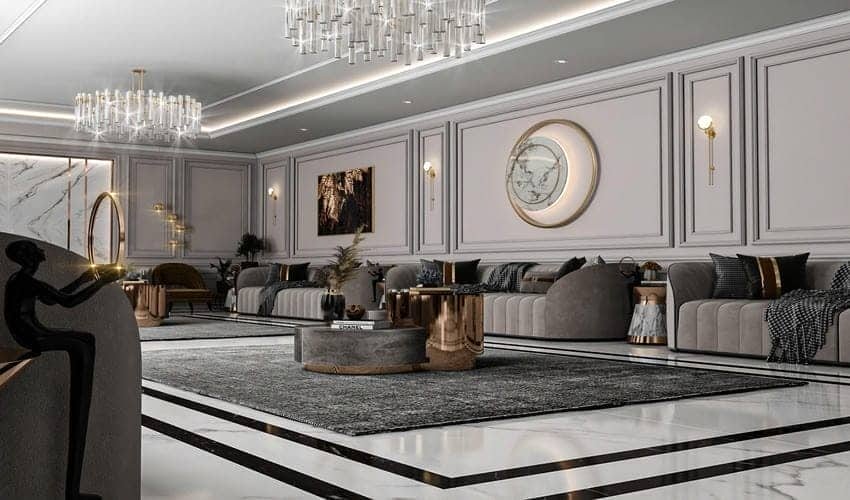
Imagine you entered into a space filled with the scent of freshly brewed Arabic coffee that is mingling with the warm aroma of oud. As you enter the space, you’re welcomed with warm smiles, greetings and your host gestures you towards the plush cushions along the wall — and that’s how you’ve entered a majlis!
A majlis is not just a seating space, rather a huge representation of Arabic hospitality. And it’s a place for family bonding and community discussions. In this blog, Dubai Sofa Upholstery will take you into the world of Majlis. You will learn how a seating that took birth in the Boudin tents made its way to chandelier-lit rooms and what is the significance behind it.
The Cultural Essence Of The Majlis
The word Majlis is an Arabic word, derived from the word Jalsa, which means “to sit”. That’s why the derived word Majlis means “the place to sit”. Although the meaning defines this word accurately, the real meaning behind the Arabic Majlis is far greater than this!
A Majlis is an epitome of Arab hospitality where warmth, respect and positive connections are expressed in every single gesture.
From the moment a person enters a majlis, they enter a unique stage of traditions. The host welcomes them with a warm gesture and takes them to their sitting place. And then the Arabic coffee, known as Qahwaa, is served along with sweet dates. And this is not just a courtesy but rather a centuries-old traditional ritual on how the Arabs used to host a guest in their majlis. This also represents the Arab generosity and their very manner of giving honor to their guests.
In Emirati tradition, the Majlis also carries deeper symbolic meanings, like:
Seating That Shows Respect
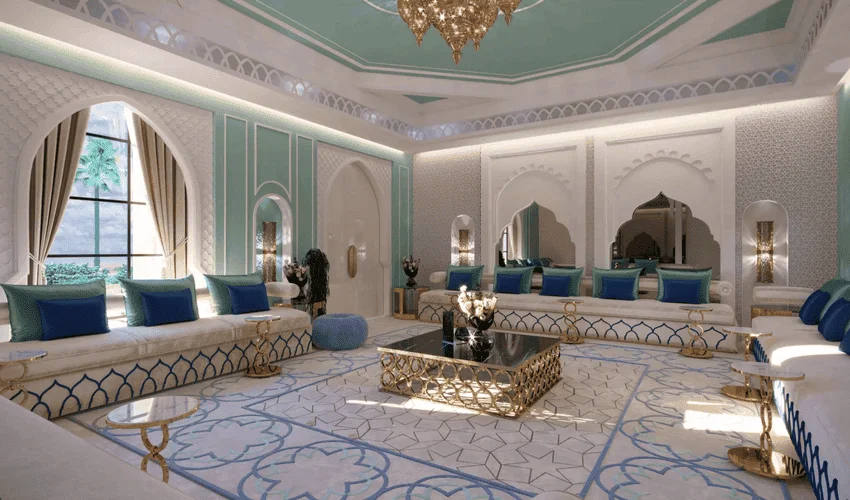
The majlis’s seating is arranged at the same height to show equality and inclusivity to everyone. Besides, honor is also given to the elders and visitors by giving them seats farthest from the entrance doors.
A Space for Dialogue
The main aim behind the majlis is to create a strong bond between families and communities and it also serves as a hub for discussions and decision-making. Plus, this place is also used for storytelling and passing down of Arab folklore.
Showcasing Heritage
Aside from the discussion point of view, a majlis is the biggest symbol of the real cultural roots. From traditional coffee pots (dallahs) to the scent of bakhoors, each of the traditional pieces tells its own story.
If you observe a real majlis, you’d find out that the essence of a majlis is not just in its furniture or walls — rather it actually lies in the atmosphere it creates through warm gestures. And this is something that has been passed down to generations.
The Journey of Majlis Through History
The majlis was born under the vast skies of the Arabian desert, where the Boudin tribes started it for communication and gathering. It wasn’t this grand from the beginning, rather it used to be just a small corner in a tent made of goat or sheep skin and lined with cushions. Elders used to gather there to discuss water routes, trade affairs and tribal problems.
The Tradition of Shura
As the majlis evolved, it gave birth to the majlis-e-shura, where consultation was practiced. All the tribal leaders and reputed members used to gather in the majlis to solve disputes and negotiate alliances. And that’s where the important tribal decisions were made. So, while the seating was simple, it had a major role in the legislation and governance of the society.
Majlis Expansion For Trade
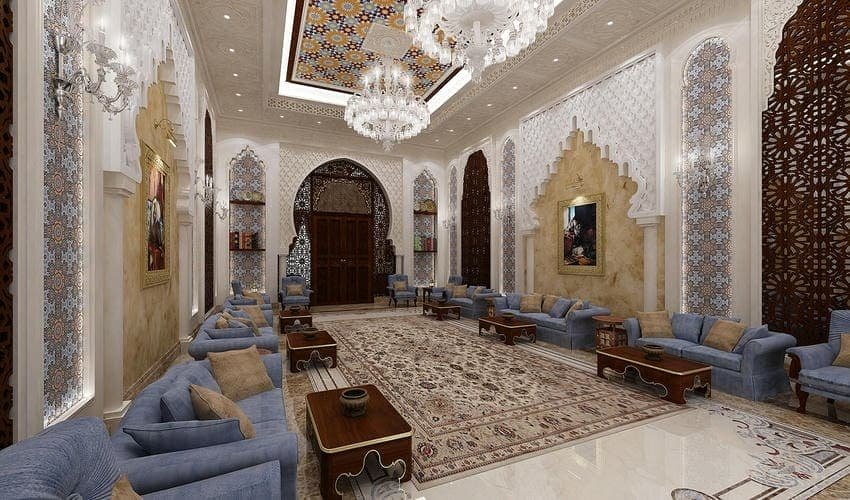
With the global expansion of trade routes, the majlis once again evolved into a space that welcomed traders. Merchants used to close deals and serve warm Qahwa and fresh dates to traders. And that’s how the majlis started absorbing the luxuries of other traditions. The furnishing refined as majlis adopted woven rugs from Persia, brass lamps from India and embroidered cushions made by local artists.
20th Century Transformation
In the mid-20th century, oil as the Arabian gold, was discovered. And that’s where the fate of the whole region flipped. The rooms that started as the sheepskin tents got lavish and grand, lit by beautiful chandeliers and burning with the aroma of bakhoor. And that change made its way to homes, palaces and even governments alike.
The whole environment changed into a more grand and opulent one. However, the purpose remained unchanged — to welcome, communicate and connect to make decisions that shape communities.
Types of Majalis In Our Modern Times
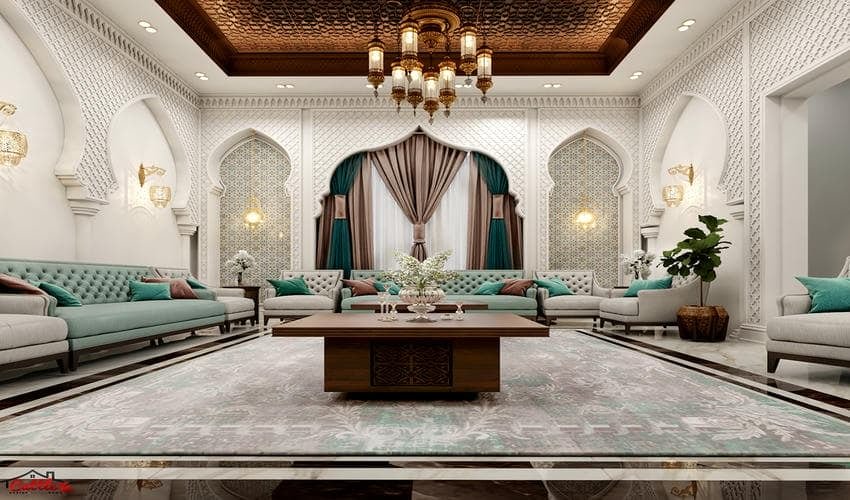
With its essence in history and roots in culture, the majlis has changed in face in modern times. The style and seating have both evolved to suit contemporary spaces. And today’s Majlis represents the personal taste of the host and their deep bond with their culture.
Here are the most common types of Majlis found in today’s times:
Traditional Majlis
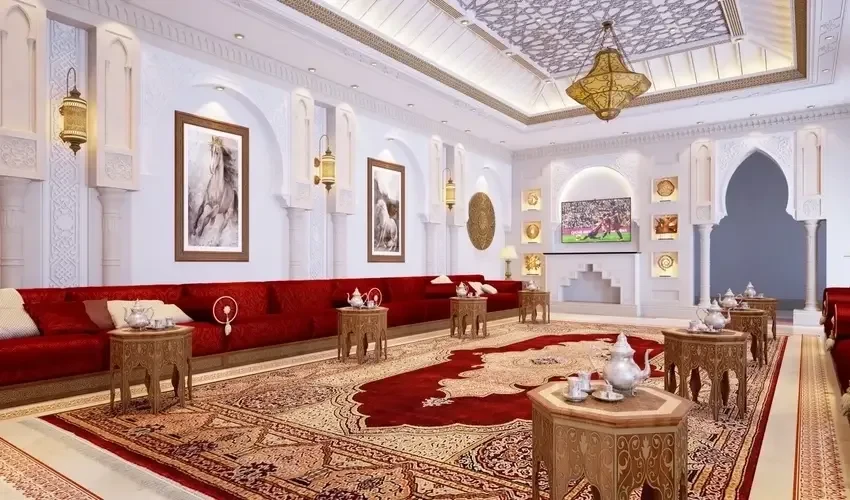
The traditional majlis is rich in Arabian heritage that incorporates the following elements:
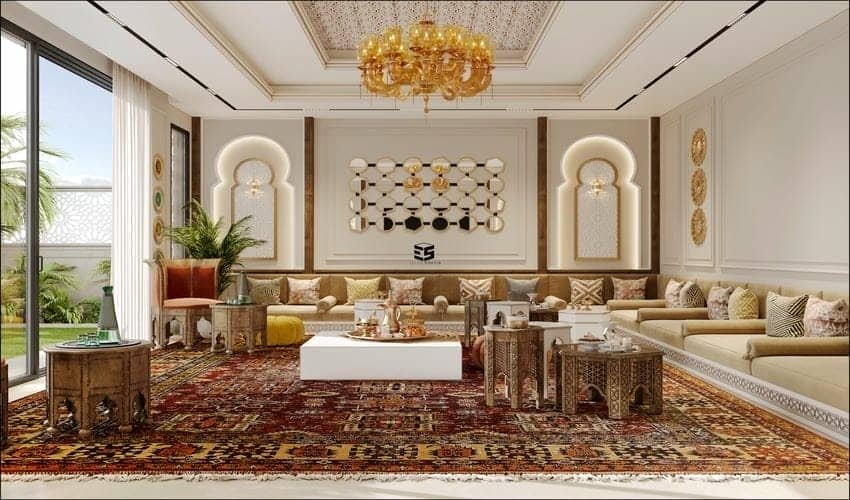
- Deep red and gold accents, along with geometric patterns, all over the space
- Low seating in the form of soft, comfy floor cushions lined with walls.
- Persian or traditional rugs in the middle to add a touch of warmth to the majlis.
- Decorative elements like Dallas pots and Arabic calligraphy on the wall.
Modern Majlis
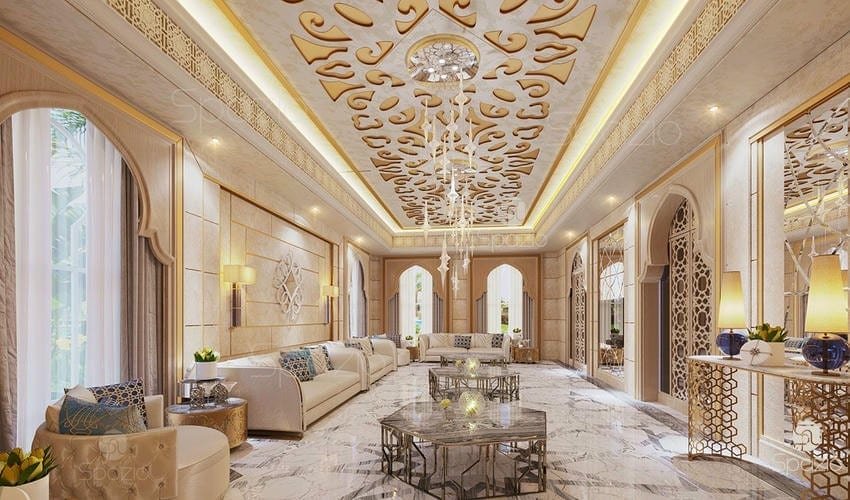
In these contemporary times, the modern majlis has changed and evolved a lot. It features:
- Minimal layouts with muted or natural color pallets.
- Modular sofas that still adhere to the wall-aligned placement styles.
- Subtle cultural touches like calligraphy or the addition of a traditional rug under a coffee table.
- Bright lights and/or big windows for a more illuminated and airy look.
Outdoor Majlis
Just like indoor majalis, outdoor majalis are also common, which are usually set in the winter season in Gulf regions. They are usually set for family events, story telling and feasting. Nowadays:
- These majalis are set in a garden, courtyard or a tent at the beach or a picnic spot.
- They use a mix of floor cushions, rugs and low coffee tables for a comfy gathering.
Style Your Perfect Majlis — Some Interior Design Tips
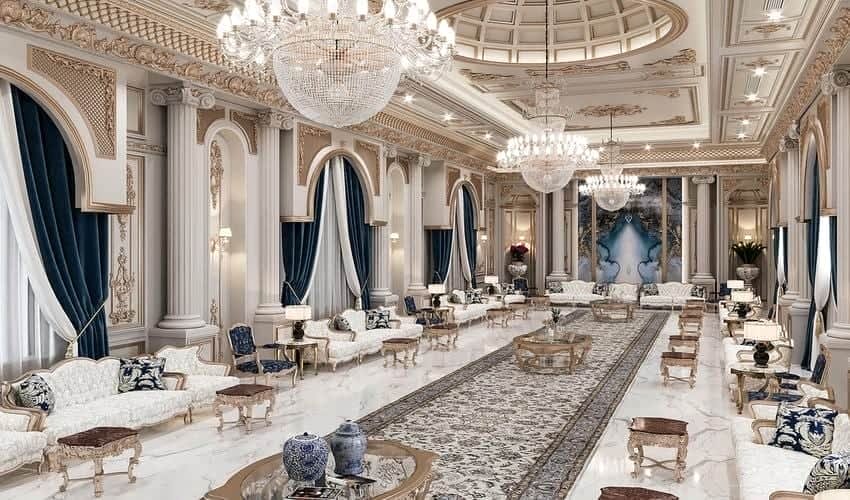
If you’re looking to upgrade your home’s seating area for a perfect family gathering, the Arabic Majlis in Dubai is your way to go. It’s the best cultural element that will add value to your space.
Here are a few tips that you can follow to create a perfect Majlis decor in your home.
Layout
The traditional layout of the majlis involves seating along the wall. You can get a modular Majlis Sofa in Dubai with low seating that will give off the perfect traditional vibe while also maintaining a modern charm.
Colors & Textures
Arab designers used to center their color pallets around bold colors and jewel tones for a rich feel and grandeur. You can use a minimal color palette, like beige, to add a touch of the desert and also consider incorporating a few jewel colors for a luxurious look.
Decor Elements
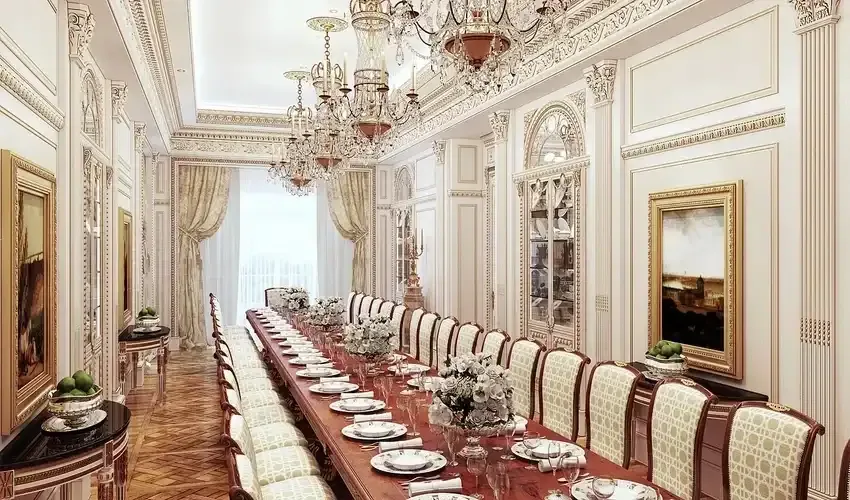
Traditional and classic decor elements are something that will make your majlis convey timelessness. You can use any of these elements that suits your decor taste:
- Traditional Persian style rugs with tribal motifs
- Silk or velvet Ottomans or specialized majlis sofas
- Arabic calligraphy or paintings on the wall
- Mashrabia style anchor walls crafts
- Low or coffee tables for serving food and drinks
Scents & Atmosphere
The majlis was also known for its rich and enchanting scents. So you can think about adding traditional oud or bakhoor scents in your majlis and give the best sensory welcome to your guests.
Final Thoughts
Majalis decors have an ageless charm to them and for good reason. They are the ultimate epitome of considerate hospitality measures and combinations that foster comfort, thoughtful communications and relaxation the best. With our above-mentioned tips and tricks, you can easily design a perfect Majlis setup that symbolizes the cultural way of sitting and at the same time presents luxury and comfort; where every seat is waiting for a story to be shared.